
Ayurveda, the ancient science of life, explains that the human body is sustained by seven fundamental tissues known as Sapta Dhatu. These Dhatus are responsible for physical strength, immunity, nourishment, and overall vitality. When these tissues are balanced and properly nourished, the body functions efficiently. However, if they become weak or imbalanced, various health issues can arise.
Understanding Sapta Dhatu in Ayurveda helps us recognize the root cause of many chronic disorders and supports long-term healing.
What Are Sapta Dhatu?
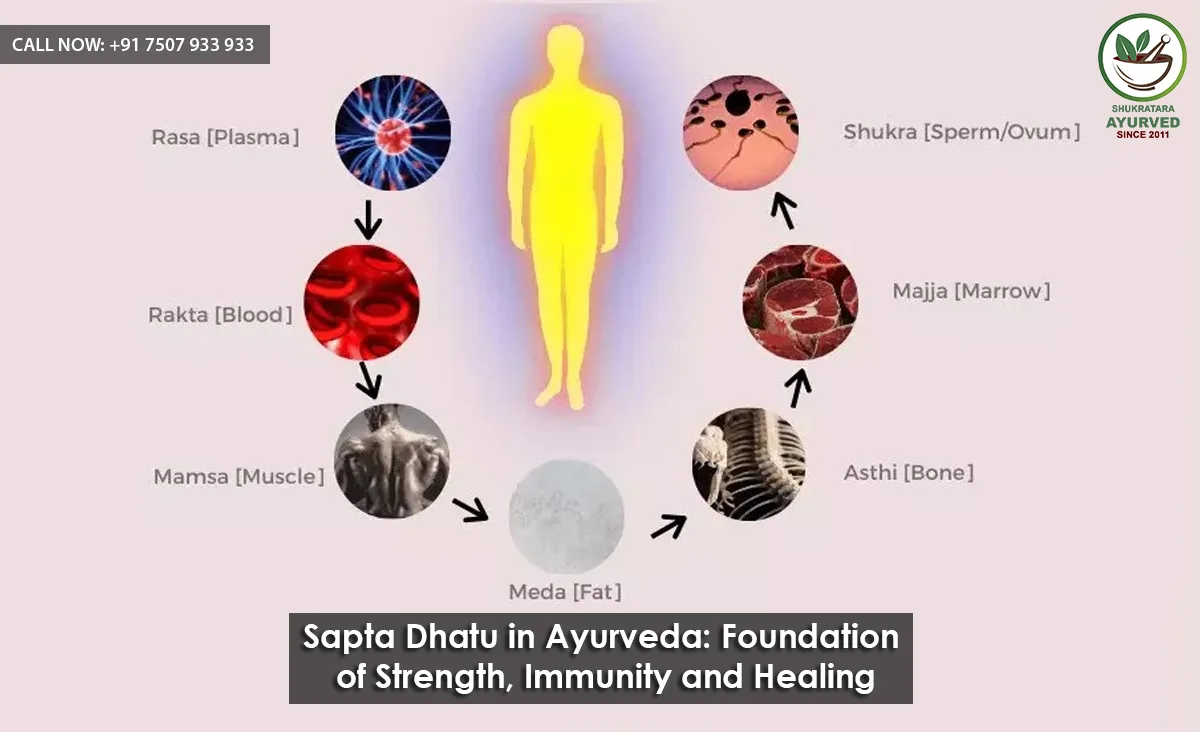
The word “Sapta” means seven and “Dhatu” means tissue or element that sustains the body. The seven Dhatus are:
- Rasa (Plasma/Nutritive Fluid)
- Rakta (Blood)
- Mamsa (Muscle Tissue)
- Meda (Fat Tissue)
- Asthi (Bone Tissue)
- Majja (Bone Marrow & Nervous Tissue)
- Shukra (Reproductive Tissue)
Each Dhatu nourishes the next one in a sequential process. Proper digestion and a strong digestive fire (Agni) are essential for healthy Dhatu formation.
Role of Sapta Dhatu in Strength and Immunity
1. Rasa Dhatu – The First Nourishment
Rasa is formed immediately after digestion. It nourishes all other tissues and maintains hydration. Weak Rasa leads to fatigue, dryness, and low immunity.
2. Rakta Dhatu – Vitality and Oxygenation
Rakta supports circulation and energy levels. Imbalanced Rakta may cause inflammation, skin issues, and weakness.
3. Mamsa Dhatu – Physical Strength
Muscles provide structure and strength to the body. Poor muscle nourishment leads to weakness and reduced stamina.
4. Meda Dhatu – Lubrication and Energy Storage
Healthy fat tissue supports hormonal balance and joint lubrication. Excess Meda may result in obesity and sluggish digestion.
5. Asthi Dhatu – Structural Support
Bones and teeth form Asthi Dhatu. Weak Asthi can cause joint pain and brittle bones.
6. Majja Dhatu – Immunity and Nervous Health
Majja includes bone marrow and nervous tissue. It strengthens immunity and supports mental clarity.
7. Shukra Dhatu – Vital Essence
The final and most refined tissue, Shukra represents vitality, reproductive health, and overall resilience.
How Digestion Affects Dhatu Formation
Ayurveda emphasizes that strong digestion (Agni) is the foundation of proper Dhatu nourishment. If digestion is weak:
- Nutrients are poorly absorbed
- Toxin accumulation (Ama) increases
- Dhatus become weak
- Immunity reduces
Chronic digestive problems such as constipation, acidity, or piles may indicate deeper Dhatu imbalance.
Signs of Dhatu Imbalance
- Constant fatigue
- Poor immunity
- Hair fall or weak bones
- Digestive discomfort
- Skin disorders
- Low stamina
Addressing Dhatu imbalance early prevents chronic disease progression.
Ayurvedic Tips to Strengthen Sapta Dhatu
1. Improve Digestion
Eat freshly cooked warm meals and avoid overeating.
2. Follow Daily Routine
Regular sleep and meal timings stabilize tissue nourishment.
3. Choose Balanced Nutrition
Include proteins, healthy fats, whole grains, and seasonal fruits.
4. Manage Stress
Mental stress weakens tissue formation.
5. Personalized Ayurvedic Care
Individual constitution (Prakriti) determines how Dhatus respond to diet and lifestyle.
Conclusion
Sapta Dhatu in Ayurveda form the foundation of strength, immunity, and healing. By maintaining strong digestion and balanced lifestyle habits, these tissues remain nourished and functional. When Dhatus are healthy, the body naturally resists disease and recovers faster.
True healing begins from proper nourishment at the tissue level.