
Ayurveda believes that true health begins with balanced digestion. Many digestive and anorectal problems such as constipation, piles (hemorrhoids), fissure, and fistula are not sudden conditions; they develop slowly due to internal imbalance. According to Ayurveda, this imbalance is primarily related to the Tridosha – Vata, Pitta, and Kapha.
At Shukratara Ayurved, we focus on identifying which dosha is disturbed and treating the root cause instead of just suppressing symptoms.
What Is Tridosha in Ayurveda?
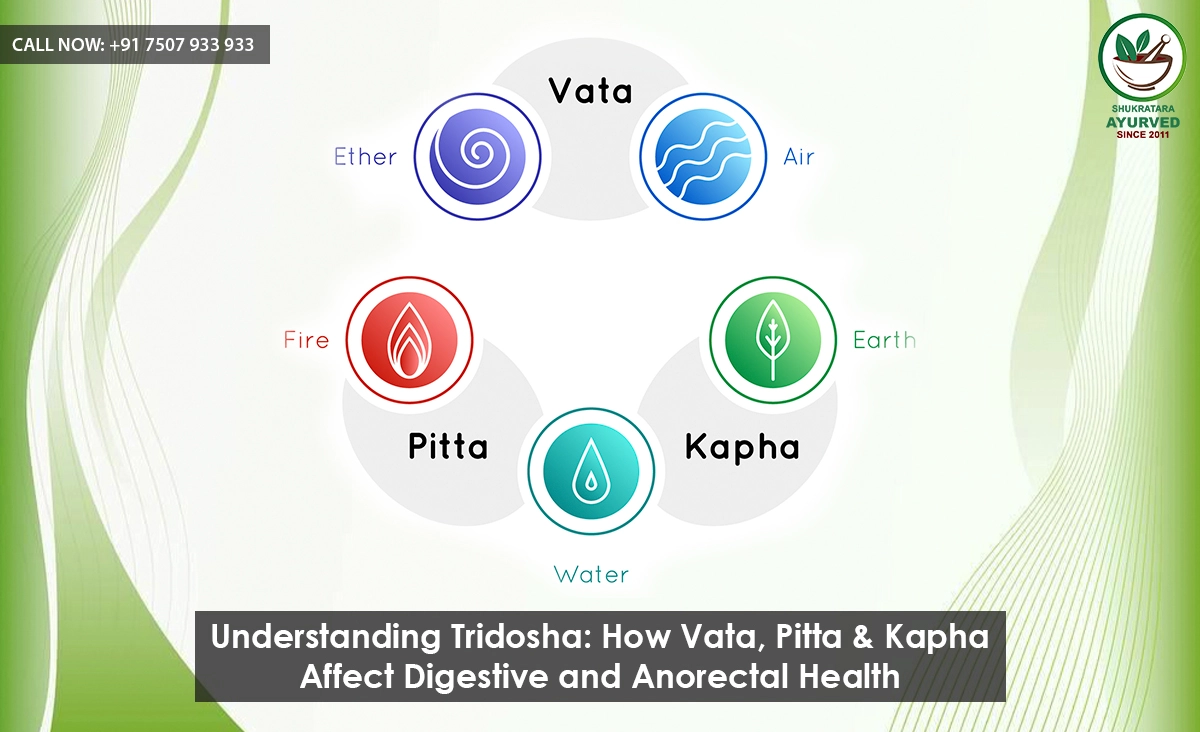
Tridosha is the foundation of Ayurvedic physiology:
- Vata – governs movement, dryness, and elimination
- Pitta – controls digestion, metabolism, and heat
- Kapha – provides structure, lubrication, and stability
Balanced Tridosha maintains healthy digestion, smooth bowel movement, and strong anorectal tissues. When disturbed, disease begins.
Role of Vata Dosha in Digestive & Anorectal Health
Vata is responsible for bowel movement and nervous control of the digestive tract.
When Vata Is Balanced:
- Regular bowel movements
- Soft, well-formed stool
- Normal evacuation without strain
When Vata Is Aggravated:
- Chronic constipation
- Hard, dry stool
- Excessive straining
- Cracks in anal canal (fissure)
- Painful piles due to pressure
Excessive fasting, dry food, stress, irregular meals, and prolonged sitting aggravate Vata.
Role of Pitta Dosha in Digestive & Anorectal Health
Pitta represents digestive fire (Agni).
When Pitta Is Balanced:
- Proper digestion
- Healthy appetite
- Efficient absorption
When Pitta Is Imbalanced:
- Burning sensation during motion
- Bleeding piles
- Inflammation in fissure
- Acidity and loose stools
Spicy food, alcohol, excessive tea/coffee, anger, and heat exposure worsen Pitta and damage rectal tissues.
Role of Kapha Dosha in Digestive & Anorectal Health

Kapha provides lubrication and strength.
When Kapha Is Balanced:
- Smooth digestion
- Strong tissue healing
- Stable bowel rhythm
When Kapha Is Aggravated:
- Sluggish digestion
- Heaviness in abdomen
- Incomplete evacuation
- Chronic constipation
- Long-standing piles
Sedentary lifestyle, overeating, junk food, and lack of exercise increase Kapha.
Tridosha Imbalance and Common Anorectal Disorders
| Disorder | Main Dosha Involved |
|---|---|
| Constipation | Vata |
| Bleeding piles | Pitta |
| Chronic piles | Kapha + Vata |
| Anal fissure | Vata + Pitta |
| Fistula | Pitta + Kapha |
This is why one medicine cannot treat all patients. Ayurveda always demands dosha-specific treatment.

Ayurvedic Approach at Shukratara Ayurved
At Shukratara Ayurved, treatment is based on:
- Tridosha assessment
- Digestive strength (Agni)
- Stool pattern and lifestyle
- Chronicity of disease
Our Treatment Includes:
- Dosha-specific Ayurvedic medicines
- Diet correction (Pathya-Apathya)
- Lifestyle guidance
- Constipation correction without laxative dependency
- Long-term recurrence prevention
Importance of Diet & Lifestyle in Tridosha Balance
Recommended:
- Warm, freshly cooked food
- Adequate hydration
- Fixed meal timings
- Walking and light yoga
Avoid:
- Junk and processed food
- Excessively spicy or oily diet
- Late-night eating
- Prolonged sitting
Conclusion
Digestive and anorectal disorders are not local problems; they are manifestations of Tridosha imbalance. Treating piles, fissure, or constipation without correcting Vata, Pitta, and Kapha leads to recurrence.
Ayurveda offers a root-cause, personalized, and natural solution. With proper Tridosha assessment and disciplined lifestyle, long-term relief is possible.
📍 Consult at Shukratara Ayurved, Nashik for authentic Ayurvedic care for digestive and anorectal disorders. Connect Dr Chaitali Tushar Shelar and Dr. Tushar Hemant Shelar on +91 7507 933 933 and get your treatment done with the help of renowned Ayurvedic Practice.