
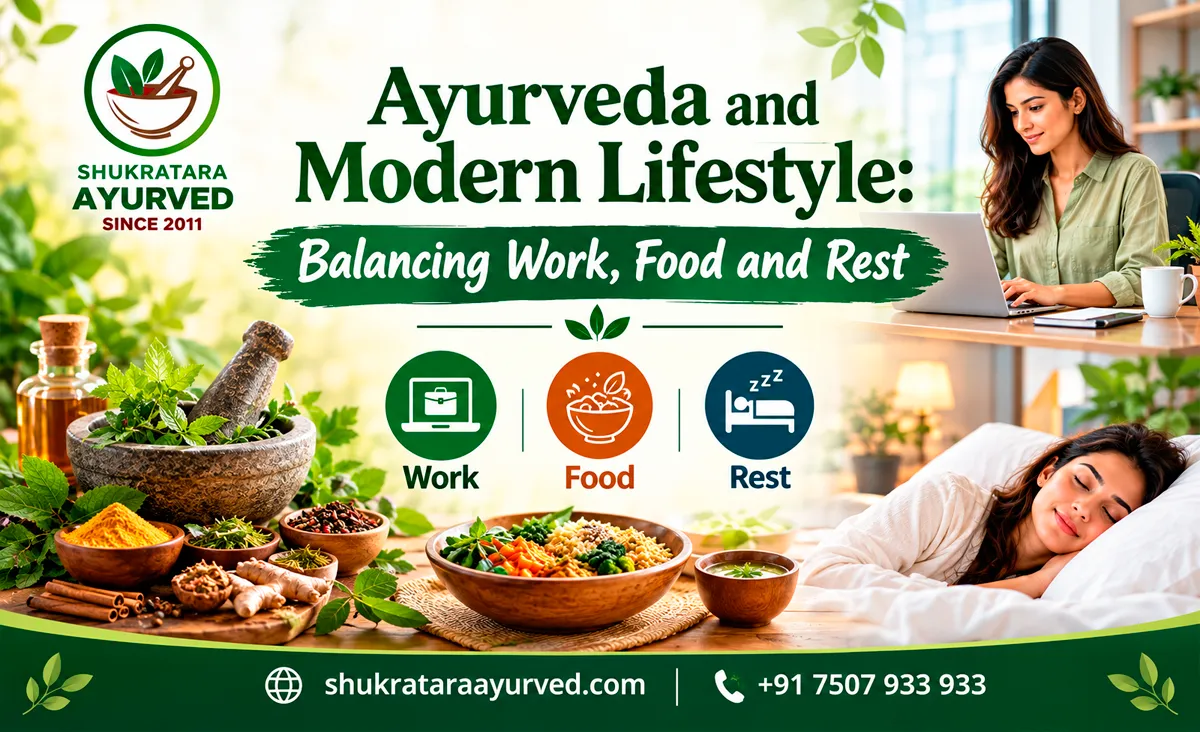

Modern life has made our daily routines faster than ever. Long working hours, irregular meals, excessive screen time, lack of sleep, stress, and limited physical activity can gradually affect digestion and overall well-being.
Ayurveda emphasizes the importance of maintaining harmony between work, food, sleep, daily routine, and mental well-being. Rather than requiring major lifestyle changes, Ayurvedic principles encourage us to develop simple and consistent habits that suit our individual needs.
Understanding the Modern Lifestyle
Today, many people spend several hours sitting at work, eat meals at irregular times, sleep late, and depend on processed or convenient foods. Work-related stress can also make it difficult to relax and maintain a regular routine.
These habits may contribute to:
- Irregular digestion
- Bloating and gas
- Constipation
- Acidity and digestive discomfort
- Fatigue
- Poor sleep
- Stress and mental tiredness
Ayurveda takes a holistic approach and considers diet, routine, sleep, activity, and mental well-being together.
Website: https://shukrataraayurved.com/
Contact: +91 7507 933 933
Address: Shukratara Ayurved, Shelar Park, Takli Road Corner, Dwarka, Nashik – 422011
1. Maintain Regular Meal Timings
One of the simplest ways to support healthy digestion is to establish regular meal timings.
Eating at approximately the same times each day can help create a consistent routine. Avoid frequently skipping meals and then eating very large meals later.
Ayurvedic eating habits include:
- Eat according to your appetite and digestive capacity.
- Prefer freshly prepared and suitable foods.
- Eat slowly and chew food properly.
- Avoid overeating.
- Minimize frequent unnecessary snacking.
- Try to eat meals without excessive distractions.
The right food can vary from person to person, so an individualized approach may be beneficial.
2. Choose Food That Supports Digestion
Modern lifestyles often encourage quick meals, packaged foods, fried snacks, sugary foods, and excessive restaurant meals.
Instead, make fresh and balanced food a regular part of your diet.
Consider including:
- Seasonal fruits and vegetables
- Whole grains according to individual tolerance
- Pulses and legumes that suit your digestion
- Appropriate sources of healthy fats
- Adequate fluids
- Freshly prepared meals
Highly processed, excessively oily, or very spicy foods may not suit everyone, particularly when consumed frequently.
3. Avoid Eating in a Hurry
Work pressure can make people eat meals while working, attending meetings, or using their phones.
Eating mindfully can help you become more aware of hunger, fullness, and how different foods affect your digestion.
Try to:
Pause → Eat slowly → Chew properly → Pay attention to your meal.
Even a few uninterrupted minutes during meals can make your eating routine more mindful.
4. Create a Healthy Work Routine
Many modern jobs involve sitting for long periods. Remaining inactive throughout the day can affect physical activity levels and may contribute to digestive discomfort in some people.
If your work involves prolonged sitting:
- Take short movement breaks.
- Walk for a few minutes when possible.
- Stretch regularly.
- Avoid sitting continuously for several hours.
- Include appropriate physical activity in your daily routine.
Small changes throughout the workday can make a meaningful difference to your overall routine.
5. Make Sleep a Priority
Sleep is an important part of maintaining physical and mental well-being. Staying up late regularly can make it difficult to maintain a consistent daily routine.
Develop a calming evening routine and aim for adequate, good-quality sleep.
Helpful habits include:
- Maintain a consistent bedtime.
- Reduce unnecessary screen use before sleep.
- Avoid heavy meals close to bedtime.
- Keep your bedroom comfortable and quiet.
- Give yourself enough time to relax before sleeping.
If persistent sleep problems are affecting your daily life, consider discussing them with a qualified healthcare professional.
6. Manage Stress Through Simple Practices
Modern work and personal responsibilities can create continuous mental pressure.
Ayurveda emphasizes the importance of maintaining balance between physical activity, rest, and mental relaxation.
Simple practices such as:
- Deep breathing
- Yoga
- Meditation
- Walking
- Spending time in nature
- Taking regular breaks
- Maintaining meaningful social connections
may help support relaxation and overall well-being.
7. Stay Hydrated
Adequate fluid intake is an important part of a healthy daily routine.
Keep water available during your workday and drink according to your thirst and individual needs. Hydration is particularly important when you are physically active or exposed to hot weather.
However, individual fluid requirements can vary depending on factors such as age, activity level, climate, and health conditions.
8. Build a Consistent Daily Routine
Ayurveda places importance on Dincharya, or a structured daily routine.
A practical modern version of Dincharya does not have to be complicated.
You can start with:
Wake up → Personal hygiene → Hydration → Movement → Regular meals → Productive work → Relaxation → Consistent sleep
The goal is not perfection. The goal is consistency.
9. Balance Work and Rest
Being productive does not mean working continuously without breaks.
Long periods of work without adequate rest can increase tiredness and make it harder to maintain healthy eating, movement, and sleep habits.
Try to create clear boundaries between work and personal time.
Take short breaks during the day and allow yourself adequate time for relaxation.
10. Listen to Your Body
Ayurveda emphasizes individualized health practices. A routine that works well for one person may not necessarily suit another.
Pay attention to patterns such as:
- Changes in appetite
- Bloating
- Constipation
- Acidity
- Changes in sleep
- Persistent fatigue
- Stress
- Changes in bowel habits
If symptoms are persistent, severe, or concerning, seek advice from a qualified healthcare professional rather than relying only on self-care.
Ayurveda and Modern Life: Finding Practical Balance
Following Ayurveda in today’s world does not mean completely abandoning modern habits or following an extremely restrictive routine.
Instead, it can mean making small, sustainable improvements:
🌿 Eat fresh and mindfully.
🌿 Maintain regular meal timings.
🌿 Move regularly during the workday.
🌿 Get adequate sleep.
🌿 Take time to relax.
🌿 Stay hydrated.
🌿 Maintain a consistent daily routine.
🌿 Choose habits according to your individual needs.
Shukratara Ayurved
Shelar Park, Takli Road Corner, Dwarka, Nashik – 422011
Call: +91 7507 933 933
Website: shukrataraayurved.com
Conclusion
Modern life can make it challenging to maintain a healthy balance between work, food, activity, and rest. Ayurveda offers a holistic framework that encourages awareness, routine, moderation, and balance.
By making simple changes to your diet, work routine, sleep schedule, physical activity, and stress-management habits, you can create a lifestyle that better supports your overall well-being.
Remember, healthy living is not about making every habit perfect. It is about building a routine that is balanced, practical, and sustainable.
For personalized Ayurvedic guidance, consult a qualified Ayurvedic practitioner who can understand your individual needs and recommend an appropriate approach.
Website: https://shukrataraayurved.com/
Contact: +91 7507 933 933
Address: Shukratara Ayurved, Shelar Park, Takli Road Corner, Dwarka, Nashik – 422011