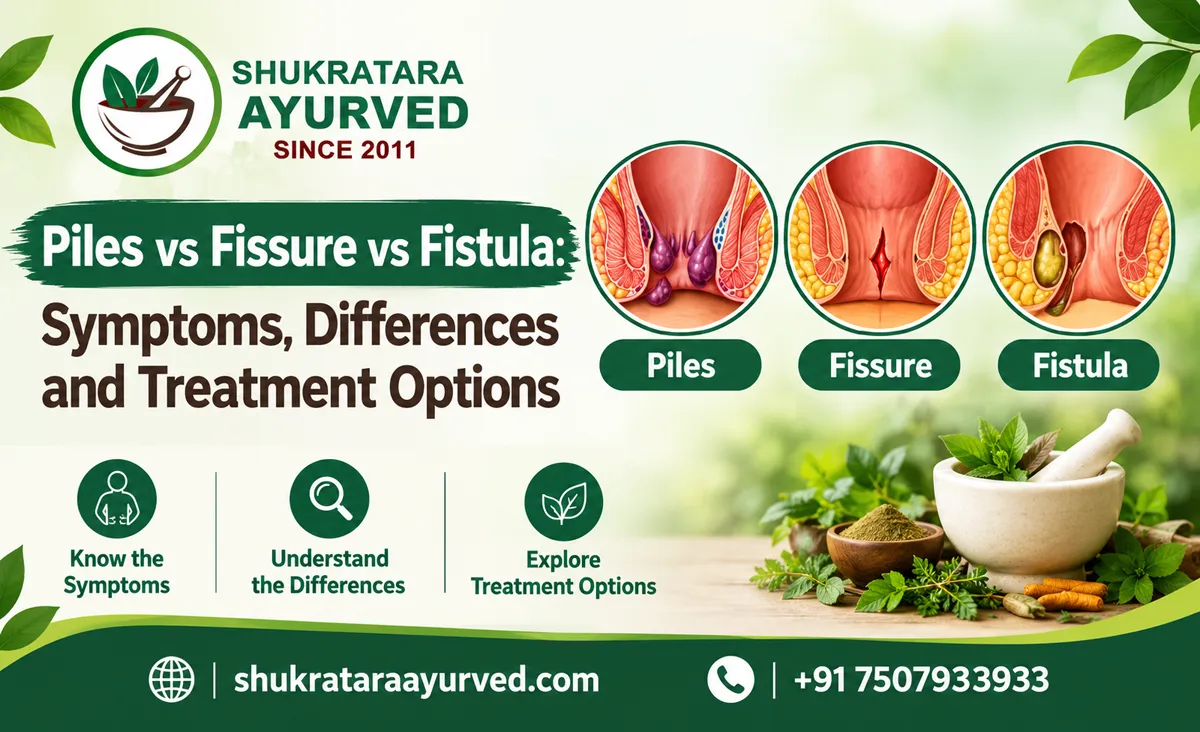

Piles, anal fissures, and anal fistulas are common anorectal conditions that can cause discomfort, pain, bleeding, or irritation around the anus. Because some symptoms overlap, it can be difficult to understand which condition may be responsible.
However, piles, fissures, and fistulas are different conditions, and each requires an appropriate diagnosis and treatment plan.
In this guide, we explain the meaning, common symptoms, causes, differences, and treatment options for piles, fissures, and fistulas, including how Ayurvedic care may fit into an overall treatment plan.
What Are Piles, Fissures, and Fistulas?
Although these conditions affect the anal or rectal area, they involve different tissues and problems.
1. What Are Piles (Hemorrhoids)?
Piles, also known as hemorrhoids, are swollen vascular cushions in or around the anus and lower rectum. They may develop internally or externally.
Common symptoms include:
- Bright red blood during or after a bowel movement
- Itching or irritation around the anus
- A lump or swelling near the anal opening
- Protrusion of tissue during bowel movements
- Discomfort or pain, particularly with some external piles
Constipation, straining during bowel movements, and prolonged sitting on the toilet may contribute to symptoms.
2. What Is an Anal Fissure?
An anal fissure is a small tear in the lining of the anal canal. It commonly develops when hard stools or repeated straining injure the delicate tissue. Persistent diarrhoea can also contribute.
Common symptoms include:
- Sharp pain while passing stool
- Burning or aching pain that may continue after a bowel movement
- A small amount of bright red blood on toilet paper or the stool
- Spasm or tightness around the anal opening
Some acute fissures heal with appropriate conservative care. Fissures that persist or repeatedly return may need prescription treatment or a procedure.
3. What Is an Anal Fistula?
An anal fistula is an abnormal tunnel connecting the anal canal or rectum to the skin near the anus. It often develops after an infection or an anal abscess.
Common symptoms include:
- Persistent or throbbing pain around the anus
- Swelling or redness
- Pus or foul-smelling discharge from a small opening near the anus
- Repeated swelling that improves after discharge and then returns
- Blood or irritation around the opening
- Fever or feeling unwell if an infection or abscess is present
Unlike many uncomplicated piles or acute fissures, an anal fistula usually does not heal on its own and often requires a surgical or procedural treatment plan.
Piles vs Fissure vs Fistula: Key Differences
| Feature | Piles | Anal Fissure | Anal Fistula |
|---|---|---|---|
| What it is | Swollen vascular tissue | A tear in the anal lining | An abnormal tunnel beneath the skin |
| Common symptom | Bleeding, itching, lump | Sharp pain during bowel movements | Persistent pain or discharge |
| Bleeding | Can occur, sometimes without pain | Often small amounts of bright red blood | May occur with discharge |
| Lump or opening | A lump may be present | A small skin tag may sometimes develop | An external opening may be visible |
| Discharge | Sometimes mucus | Not usually a defining symptom | Pus or fluid may drain |
| Common association | Straining and constipation | Hard stools or repeated diarrhoea | Often follows an abscess or infection |
| Treatment | Depends on severity | Often begins with conservative care | Frequently requires a procedure or surgery |
Important: These symptoms are clues, not a diagnosis. Rectal bleeding and anal pain can have other causes, so a healthcare professional should assess persistent or unexplained symptoms.
What Causes Piles, Fissures, and Fistulas?
Causes and contributing factors for piles
- Straining during bowel movements
- Constipation and hard stools
- Spending a long time on the toilet
- Pregnancy and ageing
- Repeated pressure on the anal area
Causes and contributing factors for anal fissures
- Passing hard or large stools
- Chronic constipation and straining
- Frequent diarrhoea
- Injury to the anal lining during bowel movements
Some persistent or unusual fissures can be associated with other medical conditions and need further evaluation.
Causes and contributing factors for anal fistulas
- An anal abscess or infection of an anal gland
- An abscess that does not heal completely
- Certain inflammatory bowel conditions, such as Crohn’s disease
- Less commonly, other infections or conditions affecting the anal area
A fistula may continue to drain or repeatedly become painful if the underlying tract remains.
Treatment Options for Piles
Treatment depends on the type of piles, their severity, and the symptoms involved.
Lifestyle and dietary measures
- Eat a balanced diet with adequate fibre.
- Drink enough fluids, unless your clinician has advised fluid restriction.
- Avoid excessive straining during bowel movements.
- Avoid sitting on the toilet for long periods.
- Maintain regular physical activity.
Medical and procedural treatment
A healthcare professional may recommend medicines to relieve symptoms or treat constipation. If symptoms persist, options may include procedures such as rubber band ligation or other minimally invasive treatments. Larger or more complicated piles may require surgery.
Ayurvedic care
An Ayurvedic practitioner may advise individualised dietary and lifestyle measures as part of care. Certain traditional procedures, including Kshara Karma, may be considered in selected cases by appropriately trained practitioners. Suitability, risks, and alternatives should be discussed with a qualified clinician.
Treatment Options for Anal Fissures
The goal of fissure treatment is to reduce pain, keep stools soft, and allow the tear to heal.
Conservative care
- Increase dietary fibre gradually.
- Maintain adequate hydration.
- Avoid delaying the urge to pass stool.
- Consider warm, shallow sitz baths for comfort.
- Follow medical advice on stool-softening measures and pain relief.
Medical treatment
A clinician may prescribe topical medicines that help relax the anal sphincter and support healing. Persistent or chronic fissures may need further treatment, such as an injection or surgery, depending on the diagnosis.
Ayurvedic support
Personalised dietary and daily-routine guidance may help support bowel regularity. Ayurvedic medicines or procedures should be considered only after assessment by a qualified practitioner, particularly if there is bleeding, severe pain, or a long-standing fissure.
Treatment Options for Anal Fistulas
Anal fistulas require particular attention because an ongoing tract can cause repeated infection or discharge.
Medical assessment
A clinician may examine the area and, when necessary, recommend tests such as an MRI or ultrasound to understand the fistula’s path and complexity.
Procedural and surgical treatment
Depending on the fistula, treatment may involve draining an abscess, fistulotomy, seton placement, or another sphincter-preserving procedure. The appropriate option depends on the tract’s location, complexity, and relationship to the muscles that control bowel movements.
What about Kshar Sutra?
Kshar Sutra is a traditional Ayurvedic medicated-thread technique used for selected fistula cases by trained practitioners. It is not suitable for every fistula. A proper diagnosis, discussion of alternatives and risks, and coordinated specialist care are important before choosing this or any other procedure.
Do not attempt to treat a fistula with home remedies alone. A persistent opening, pus discharge, or recurrent swelling needs medical evaluation.
How Can You Support Anorectal Health?
Healthy bowel habits may help reduce straining and support general digestive health:
- Eat fibre-rich foods: Include vegetables, fruit, legumes, and whole grains as suitable for you.
- Drink adequate fluids: Follow your clinician’s advice if you have a condition that limits fluid intake.
- Stay active: Regular movement can support bowel regularity.
- Avoid excessive straining: Give yourself time, but avoid prolonged sitting on the toilet.
- Maintain gentle hygiene: Clean the area gently and avoid products that cause irritation.
- Seek medical advice when needed: Do not assume every symptom is caused by piles.
These measures may support comfort and bowel health, but they do not replace treatment for a fistula, significant bleeding, or another underlying condition.
When Should You See a Doctor?
Arrange a medical assessment if you have:
- Repeated or persistent bleeding during bowel movements
- Severe or ongoing anal pain
- A lump, swelling, or opening near the anus
- Pus or foul-smelling discharge
- Symptoms that keep returning or do not improve
Seek urgent medical care if you have severe anal pain with fever or chills, heavy or continuous bleeding, or black or dark-red stools.
Frequently Asked Questions
Are piles, fissures, and fistulas the same condition?
No. Piles involve swollen vascular tissue, a fissure is a tear in the anal lining, and a fistula is an abnormal tunnel connecting the anal canal to nearby skin. Their symptoms can overlap, so examination may be necessary.
Which condition causes sharp pain during bowel movements?
A fissure commonly causes sharp pain during a bowel movement, sometimes followed by burning pain. However, other conditions can also cause anal pain, so persistent symptoms need assessment.
Does a fistula always require surgery?
Most anal fistulas need a procedure or surgery because the tract rarely heals permanently on its own. The best approach depends on the fistula’s anatomy and the individual patient.
Can piles, fissures, and fistulas be treated with Ayurveda?
Ayurvedic dietary and lifestyle guidance may support general bowel health, and selected traditional procedures may be considered in appropriate cases. Treatment depends on the diagnosis and severity. A fistula, persistent bleeding, or severe pain should not be managed with home remedies alone.
How can I prevent constipation and excessive straining?
A fibre-rich diet, adequate fluids, regular movement, and responding to the urge to pass stool may help. If constipation persists, seek advice from a healthcare professional.
To read this blog in marathi, click Here: मूळव्याध, फिशर आणि फिस्टुला यांमधील फरक: लक्षणे आणि उपचारांचे पर्याय
Conclusion
Piles, fissures, and fistulas may cause similar discomfort, but they are different conditions with different treatment needs. Recognising the differences can help you seek appropriate care sooner.
At Shukratara Ayurved, patients can seek guidance on Ayurvedic approaches to anorectal health. The right treatment should always be based on a proper diagnosis, individual assessment, and an understanding of the available medical and procedural options.
Do not ignore persistent pain, bleeding, swelling, or discharge. Seek professional medical advice to understand the cause and choose an appropriate treatment plan.
For consultation:
- Shukratara Ayurved
- Phone: +91 7507 933 933
- Address: Shelar Park, Takali Road Corner, Dwarka, Nashik, MH – 422011
- Website: shukrataraayurved.com