
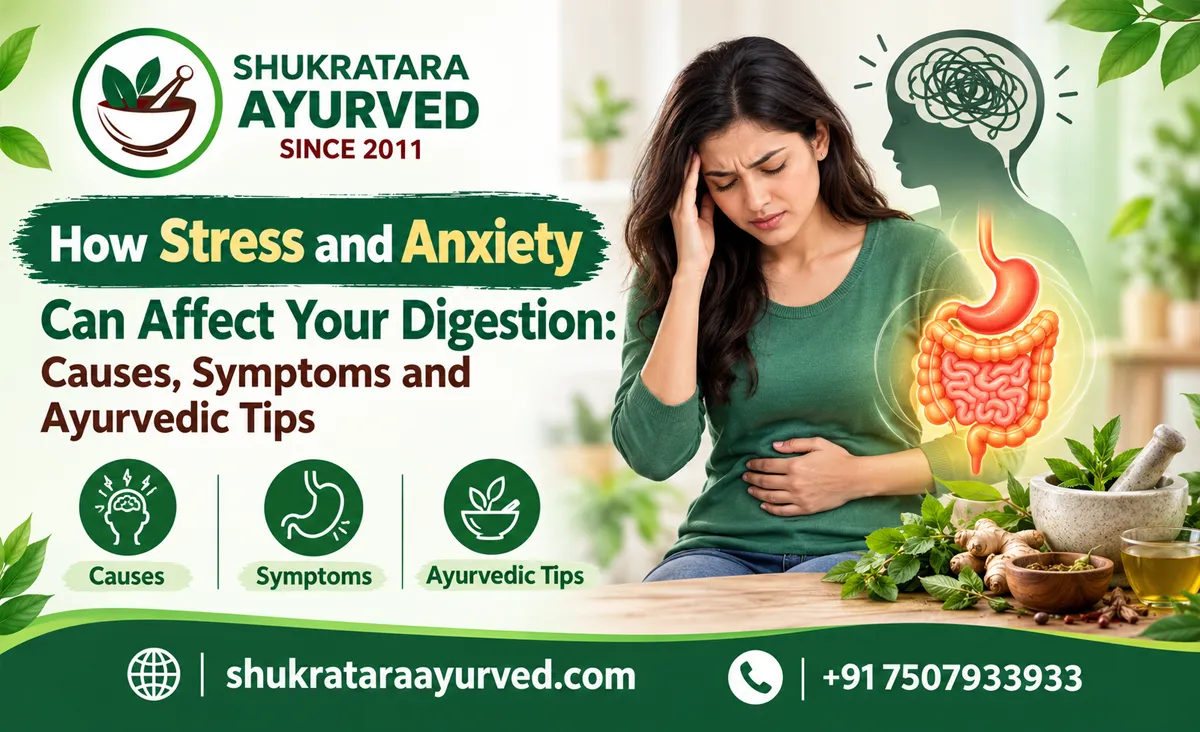

Have you ever experienced stomach pain before an important meeting, bloating during a stressful day, or changes in your bowel habits when you feel anxious? These experiences are common because the brain and digestive system are closely connected.
Stress and anxiety can influence digestion, appetite, bowel movements, and overall gut comfort. While occasional digestive discomfort may improve when stress decreases, persistent symptoms should not be ignored.
In this blog, we will explore how stress affects digestion, common symptoms to watch for, and practical lifestyle habits—including Ayurvedic approaches—that may help support digestive health.
1. Understanding the Gut-Brain Connection
The gut and brain communicate continuously through nerves, hormones, immune signals, and the gut microbiome. This communication network is often called the gut-brain axis.
When you experience stress, your body activates its stress response. This can affect the movement of food through the digestive tract, increase sensitivity to abdominal sensations, and influence digestive secretions.
As a result, some people experience constipation, loose stools, bloating, nausea, or abdominal discomfort during stressful periods.
The relationship works both ways: digestive discomfort can also increase anxiety, creating a cycle that may be difficult to break.
2. Common Digestive Problems Linked to Stress and Anxiety
A. Acidity and Heartburn
Stress may worsen symptoms of acidity or heartburn in some people. Stress-related changes in eating habits, irregular meals, poor sleep, and increased sensitivity to discomfort can contribute to symptoms.
Helpful habits:
- Eat meals at regular times.
- Avoid lying down immediately after eating.
- Identify foods and drinks that trigger your symptoms.
- Limit excessive caffeine if it worsens your discomfort.
Persistent heartburn may have several causes and should be assessed by a healthcare professional.
B. Bloating and Gas
Stress can affect gut movement and increase sensitivity to gas in the digestive tract. You may feel abdominal fullness, tightness, or discomfort even when the amount of gas is not unusually high.
Helpful habits:
- Eat slowly and chew food thoroughly.
- Avoid rushing through meals.
- Take a gentle walk after eating.
- Notice whether particular foods trigger bloating.
C. Constipation
Stress may disrupt normal bowel routines and influence intestinal movement. People who are anxious or busy may also ignore the urge to pass stool, drink less water, or eat fewer fibre-rich foods.
Helpful habits:
- Drink adequate water throughout the day.
- Include fruits, vegetables, whole grains, and other fibre-rich foods as tolerated.
- Maintain a regular toilet routine.
- Stay physically active.
Increase fibre gradually, as a sudden increase may worsen gas and bloating in some people.
D. Loose Motions or Diarrhoea
Stress can stimulate intestinal activity in some people, causing urgency, abdominal cramps, or loose stools. These symptoms may occur in people with irritable bowel syndrome (IBS), a condition involving recurring abdominal pain and changes in bowel habits.
However, diarrhoea should not automatically be attributed to anxiety. Infection, food intolerance, medication effects, and other medical conditions can also cause it.
E. Abdominal Pain and Nausea
Anxiety can make the digestive system more sensitive to normal sensations. Some people experience stomach cramps, nausea, reduced appetite, or a feeling of uneasiness in the abdomen during stressful situations.
If pain is severe, persistent, or accompanied by other concerning symptoms, seek medical evaluation rather than assuming stress is the cause.
3. Why Does Stress Affect Digestion?
Several changes can explain the connection between emotional stress and digestive symptoms.
Changes in gut movement: Stress may speed up or slow down the movement of food through the digestive tract, depending on the individual and situation.
Increased gut sensitivity: Stress can make normal digestive sensations feel more painful or uncomfortable.
Changes in eating habits: Anxiety may lead to skipped meals, overeating, eating too quickly, or relying on foods that aggravate symptoms.
Poor sleep: Insufficient or disrupted sleep can affect stress regulation and may worsen digestive discomfort.
Changes in the gut microbiome: Stress and lifestyle changes may influence the gut microbiome, although the exact effects vary and are still being studied.
These factors can interact, which is why managing digestion often involves more than changing food choices alone.
4. The Ayurvedic Perspective on Stress and Digestion
Ayurveda places importance on the relationship between mental well-being, daily routines, food habits, and digestive function.
The Ayurvedic concept of Agni refers to the body’s digestive and metabolic capacity. Traditional Ayurvedic explanations associate irregular eating, insufficient rest, and emotional strain with disturbances in digestive balance.
Ayurveda also considers the role of Vata, which is traditionally associated with movement and nervous-system-related functions. Stress and irregular routines may be described in Ayurvedic terms as contributing to Vata imbalance.
These are traditional Ayurvedic concepts and should not be considered direct equivalents of modern medical mechanisms.
An Ayurvedic approach may include:
- Maintaining regular meal and sleep schedules.
- Choosing suitable, freshly prepared foods according to individual tolerance.
- Practising gentle yoga, breathing exercises, and meditation.
- Seeking individualised advice from a qualified Ayurvedic practitioner.
Herbal preparations should not be started without professional advice, particularly if you take medication, are pregnant, or have an existing health condition. Ayurvedic care should complement—not replace—necessary medical assessment.
5. Practical Ways to Reduce Stress and Support Digestion
A. Practise Deep Breathing
Spend five minutes breathing slowly and comfortably. Breathe in gently through your nose and allow your abdomen to expand, then breathe out slowly.
Avoid forcing your breath or holding it if this causes discomfort. Regular relaxation practice may help reduce stress and improve your ability to cope with digestive symptoms.
B. Eat Mindfully
Give yourself enough time to eat. Sit comfortably, chew thoroughly, and minimise distractions during meals.
Mindful eating may help you recognise hunger and fullness cues and reduce the habit of eating too quickly when stressed.
C. Maintain a Consistent Routine
Try to keep your meal, sleep, and waking times reasonably consistent. A predictable routine can make it easier to maintain healthy eating habits and regular bowel movements.
D. Include Gentle Physical Activity
Walking, gentle yoga, stretching, and other suitable physical activities can support general health and stress management.
Start with an activity that fits your fitness level. If you have a medical condition or movement limitations, seek professional guidance about suitable exercises.
E. Prioritise Quality Sleep
Adults generally need at least seven hours of sleep per night, although individual needs vary.
To support better sleep:
- Maintain a consistent bedtime.
- Reduce stimulating activities before bed.
- Limit late-day caffeine if it affects your sleep.
- Create a calm and comfortable sleeping environment.
F. Identify Your Personal Triggers
Keep a simple diary of meals, stress levels, sleep, and digestive symptoms. Over time, you may notice patterns that help you make informed changes.
Avoid eliminating multiple food groups without professional guidance, as unnecessary restrictions can lead to nutritional deficiencies.
G. Seek Support for Ongoing Anxiety
If anxiety is persistent or interferes with daily life, consider speaking with a mental health professional. Psychological approaches, including cognitive behavioural therapy when appropriate, can help manage anxiety and may improve symptoms in some people with gut-brain interaction disorders.
6. When Should You Consult a Doctor?
Stress can contribute to digestive symptoms, but it is not the only possible cause. Do not delay medical evaluation if you experience:
- Blood in your stool or black, tarry stools.
- Unexplained weight loss.
- Persistent or severe abdominal pain.
- Repeated vomiting or difficulty swallowing.
- Ongoing diarrhoea or constipation.
- Fever, dehydration, or symptoms that keep getting worse.
- New digestive symptoms that persist or repeatedly return.
Seek urgent medical care for severe abdominal pain, significant bleeding, fainting, or signs of serious dehydration.
A healthcare professional can assess your symptoms and determine whether further testing or treatment is needed.
7. Frequently Asked Questions
Can anxiety cause stomach problems?
Yes. Anxiety can influence gut movement and sensitivity, contributing to symptoms such as bloating, abdominal pain, nausea, constipation, or loose stools. However, other medical causes may also need to be considered.
Can stress cause constipation?
Stress may contribute to constipation by affecting bowel activity and daily habits. Low fluid intake, insufficient fibre, reduced physical activity, and certain medications can also play a role.
Does stress affect people with IBS?
Stress may worsen symptoms in some people with irritable bowel syndrome (IBS). Managing stress alongside appropriate dietary and medical care may help, although results vary from person to person.
Can Ayurveda help with stress-related digestive problems?
Ayurvedic lifestyle practices, regular routines, suitable food choices, and relaxation techniques may support general well-being. The most appropriate approach depends on the individual’s symptoms and health needs. Persistent symptoms require medical evaluation.
How long do stress-related digestive symptoms last?
The duration varies. Some symptoms may settle when a stressful situation passes, while recurring symptoms may need further assessment and a structured management plan. Consult a healthcare professional if symptoms persist or worsen.
To read this blog in marathi, click Here: ताण आणि चिंता यांचा पचनसंस्थेवर कसा परिणाम होतो? कारणे, लक्षणे आणि आयुर्वेदिक उपाय
Conclusion
Stress and anxiety can affect digestion through the gut-brain connection, influencing bowel movements, abdominal sensitivity, appetite, and digestive comfort.
A balanced routine, mindful eating, adequate sleep, regular physical activity, and relaxation techniques may help support digestive health. From an Ayurvedic perspective, maintaining regular daily habits and paying attention to individual dietary needs are important parts of overall well-being.
However, persistent digestive problems should not automatically be blamed on stress. Accurate diagnosis and appropriate treatment are essential for long-term health.
Get Guidance for Your Digestive Health
Shukratara Ayurved
Phone: +91 7507 933 933
Address: Shelar Park, Takali Road Corner, Dwarka, Nashik, MH – 422011
Website: https://shukrataraayurved.com/
Contact a qualified healthcare professional to discuss persistent digestive symptoms and suitable treatment options.